
In 1929, H. H. Nininger took another leave from teaching at McPherson College and set out on a Mexico expedition in search of meteorites. This time his companion was Alex Richards, a student who had traveled with him on the Natural History Trek and accompanied him on the earlier side trip to Cananea.
Nininger had already examined most of the major meteorite collections in North America, with the notable exception of the one in Mexico City. Mexico remained largely unexplored territory for him. He believed meteorites could still be found there—and that acquiring specimens might help him turn his growing interest in meteorites into a livelihood.
Richards, who had considerable mechanical experience, built a rugged automobile for the expedition from parts of other cars. Nininger wanted something tough—and ugly enough that nobody would want to steal it. The resulting vehicle had seven speeds forward, five backward, extra ground clearance, and a skid plate protecting its underside.
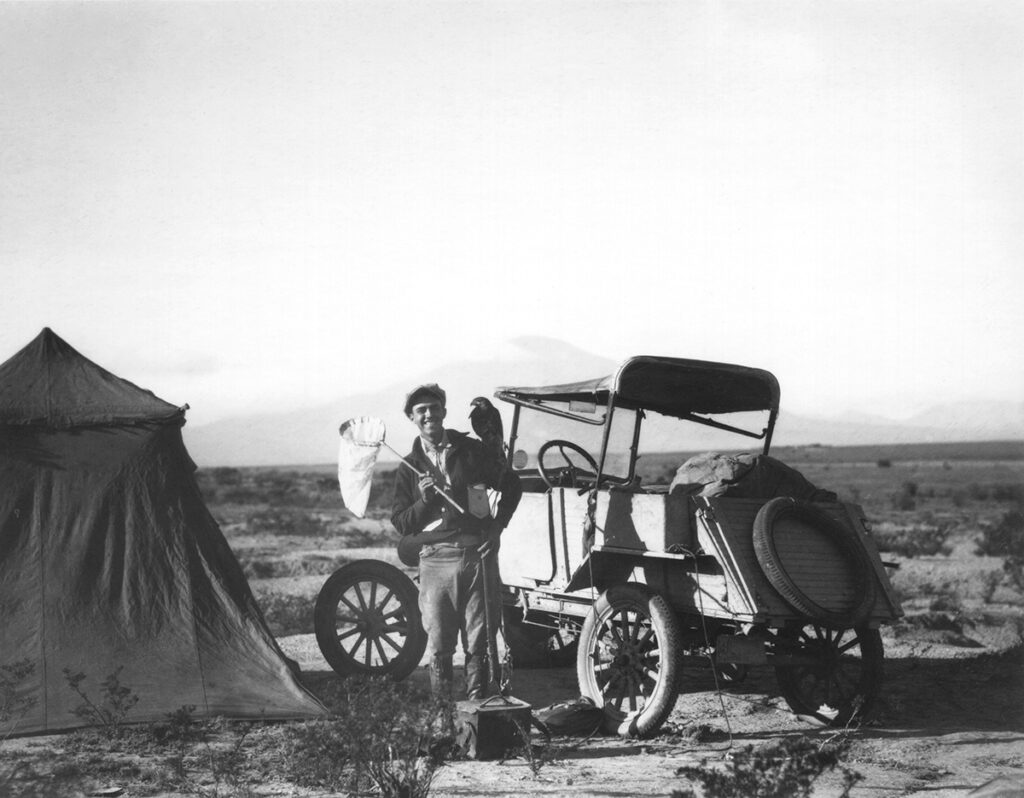
At Laredo, Texas, the two men stopped at the Chamber of Commerce for advice. What they heard was hardly encouraging. They were warned about bandits, disease, bad water, and the near absence of roads beyond Monterrey. They were told they would never reach Mexico City—or, if they did, they would never return.
They went anyway.
Eventually they reached Mexico City, where Nininger met geologist Frederick K. G. Mullerried and gained access to the meteorite collection at the National Museum. Nininger and Richards spent weeks identifying specimens, correcting labels, preparing samples, and arranging exchanges. But one of the expedition’s greatest successes was still ahead.
Nininger had read about the so-called Toluca meteorite fall. When Spanish settlers first visited the little village of Xiquipilco, near Toluca and Mexico City, in 1776, they found residents making implements out of “native iron.” While not yet recognized as meteorites, residents told visitors they “always” had made their tools from iron picked up in the fields. The native iron had since been confirmed to be meteoritic, and Nininger hoped to acquire Xiquipilco meteorites, and ideally one of the tools.
By the time Nininger got the opportunity to travel to the village of Xiquipilco in search of meteorites, Richards had become ill and had to remain behind. Mullerried accompanied Nininger instead.
At Xiquipilco, the village mayor invited the two men to breakfast. He soon returned carrying a twenty-pound meteorite. Nininger asked whether he could obtain more.
“Do you think you can get more of this?”
“I think I can get you a ton.”
Word spread through the village. Soon people were arriving with meteorites in baskets, bags, and even loose in their hands. Nininger found a three-pound specimen himself in a nearby field. Within a few hours, he and Mullerried had purchased 700 pounds of meteorites—and ran out of money while people were still bringing them more.
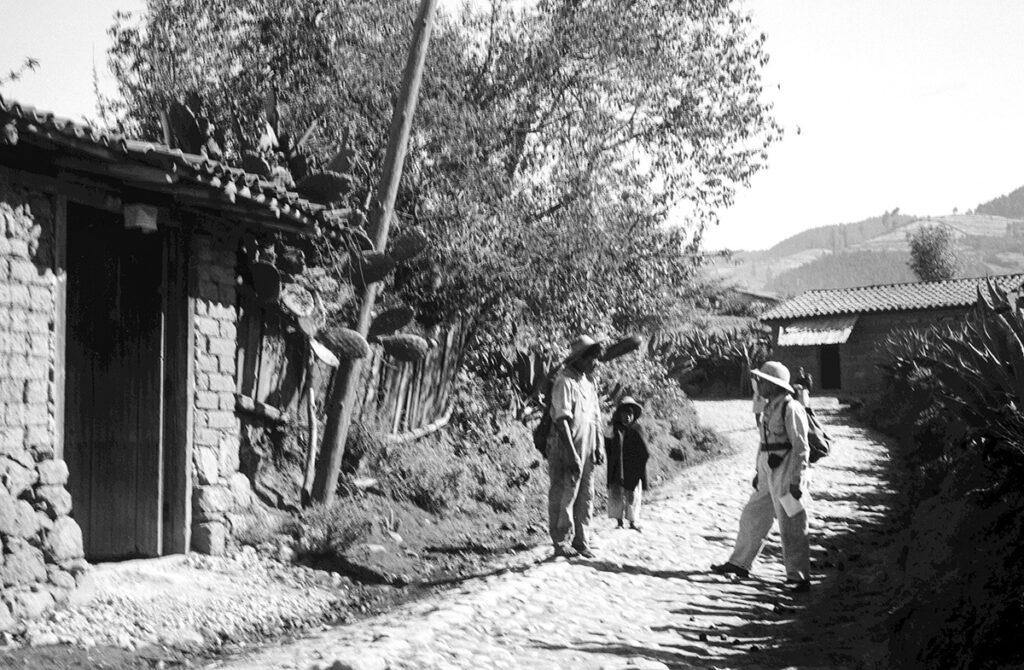
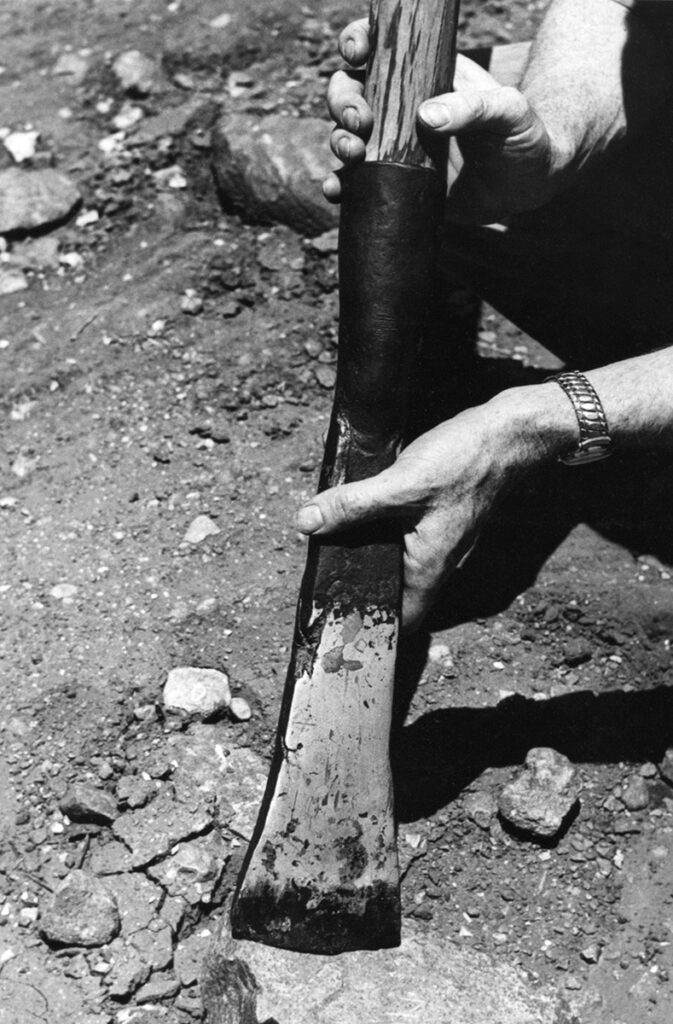
Still searching for implements made from meteorites, Nininger visited the village blacksmith shops. At the fourth and last shop, he spotted a crowbar-like tool and recognized the characteristic Widmanstätten pattern of meteoritic iron. When he asked the blacksmith what it was made from, the answer was simple: “Areolito”—meteorite. Nininger bought the tool.
By the end of the expedition, Nininger had acquired more than 900 pounds of Mexican meteorites, including specimens from Xiquipilco and several other localities. The journey also expanded his scientific knowledge, his collection, and the network of contacts on which his emerging career increasingly depended.
What had begun only a few years earlier as an absorbing interest was becoming something more. Nininger was finding a way to make meteorites his life’s work.
The Mexico expedition and Nininger’s search at Xiquipilco are told in greater detail in In Search of Falling Stars.