
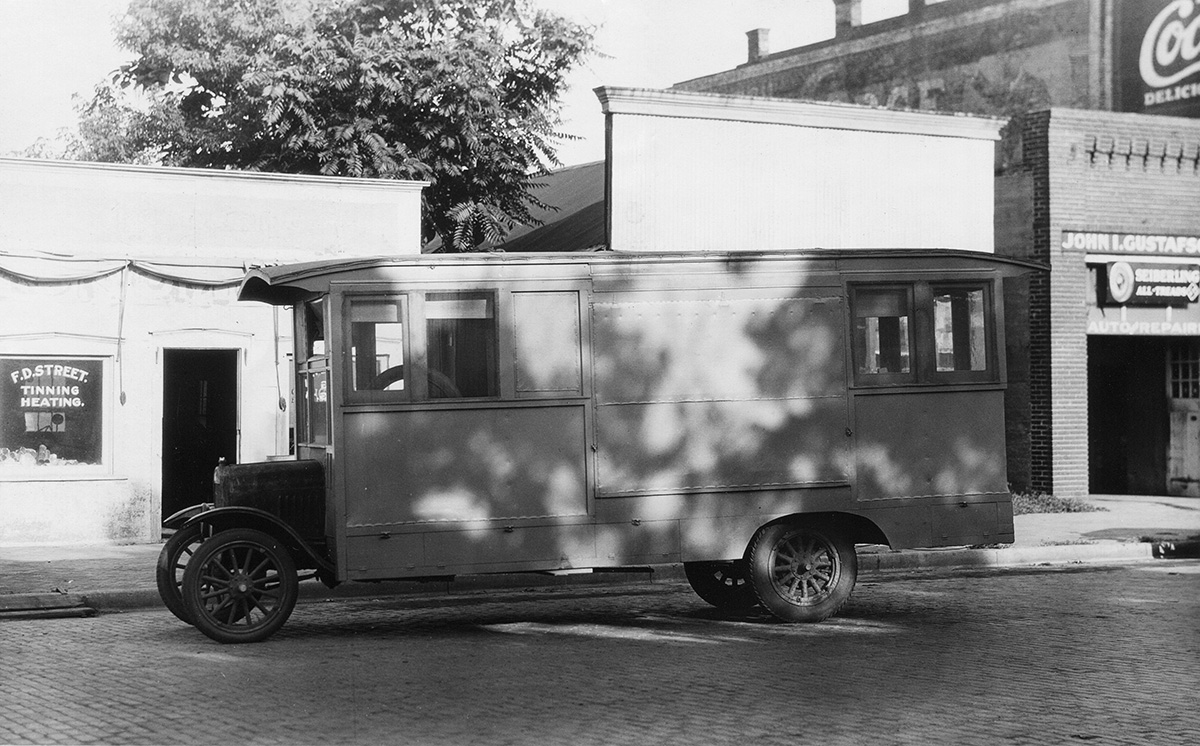
In 1925, H. H. Nininger took a year away from teaching at McPherson College and set out with his family on an ambitious journey through the American West. Their home on the road was a homemade house-car they called the “Nininger Runabout.” His wife, Addie, and their children went along, including Margaret, who was only six months old when the trip began.
Readers of Nininger’s 1972 autobiography, Find a Falling Star, may recognize the Runabout. A photograph labeled “Nininger Runabout” appeared in the book, but there was no accompanying explanation. In the rush to get the book into print, the publisher had deleted the chapter describing the vehicle and the adventures surrounding the trip—but the photograph remained.
Travel in the West was very different in 1925, and the family encountered trouble almost immediately. Nininger later recalled:
Kansas roads of 1925 were unpaved. We had not gone ten miles from McPherson before rain began. Just thirteen miles and two hours from home, we had to pull off of the impassable mud ways and park beside the Smoky Hill River.
Ten days later, we were still there.
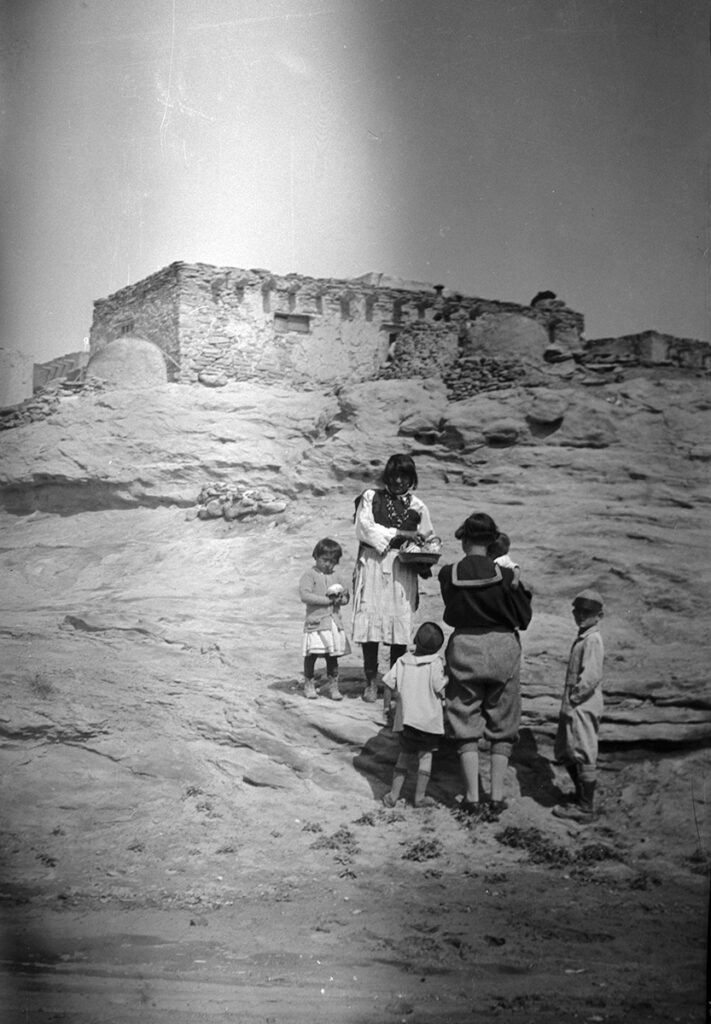
Once underway, the journey took the family through Kansas, Oklahoma, Texas, New Mexico, and Arizona. It was both a family adventure and an opportunity for Nininger to pursue his growing interest in meteorites. Along the way he lectured, visited collections, acquired specimens, and looked for ways to turn that interest into a livelihood.
One particularly significant stop was Meteor Crater in Arizona. Nininger wrote:
We drove our mounted cabin to the base of the abrupt slope leading to the rim of the yawning ‘Meteor Crater,’ pitched camp for the night, and then before turning in, climbed the few hundred feet of steep rise to look into this strangest of all earthly pits, where massive beds of limestone and sandstone had been shattered by a blow from other worlds.
Keeping the family and the Runabout on the road required ingenuity. Nininger financed the trip through lectures on biology and meteorites, meteorite sales, and whatever other opportunities he could find. As he later recalled:
When we started on our nine-month tour, we had $19.67 in cash. We owed $300 at the bank, and some $50 worth of finishing still needed to be put into our wheeled home. I had a half-dozen lectures scheduled ahead, at $25 each, the nearest about 200 miles and two weeks from home.
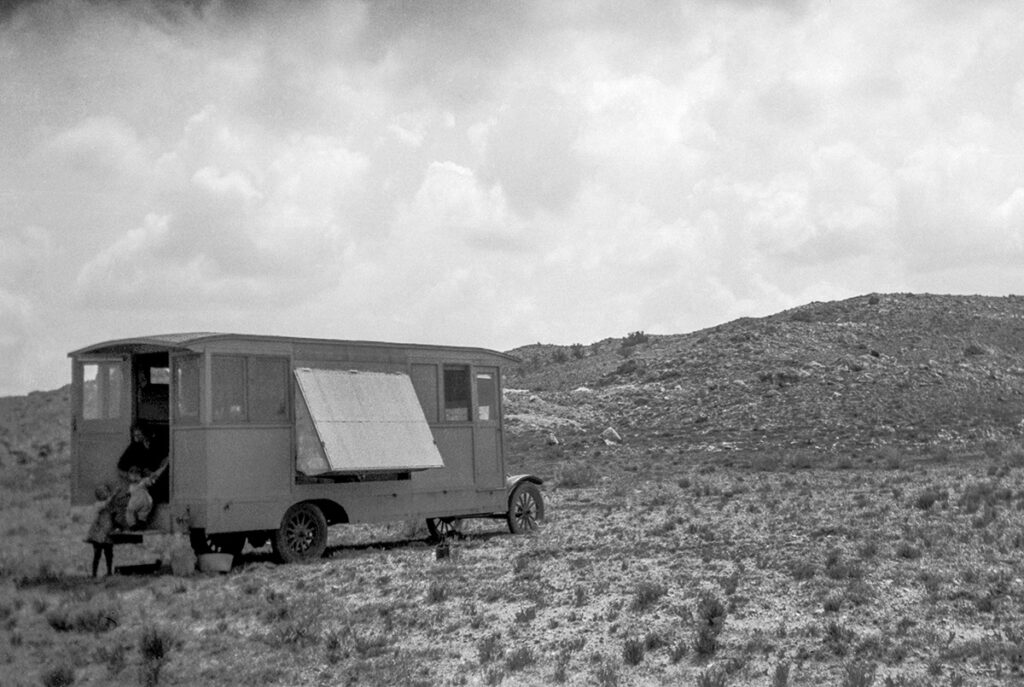
The trip did not immediately produce the meteorite discoveries Nininger had hoped for. But it did little to diminish his determination. Looking back on the journey, he wrote:
I still had hopes of somehow making a livelihood out of my interest in meteorites. No new meteorites had come to light as a result of my lectures during our house-car tour of Kansas, Oklahoma, Texas, New Mexico, and Arizona, but I had been able to buy a few specimens. . . . The only visible result of my lectures was the very keen interest shown by the audiences, but I could not doubt ultimate success.
The house-car journey came during the formative years of Nininger’s work with meteorites. The following year he would take to the road again, this time with thirteen students on the Natural History Trek of 1927–28, continuing to visit collections, acquire specimens, and develop the methods that would help shape his career.
The missing story of the Nininger Runabout, along with other material omitted from Nininger’s original autobiography, has been restored in In Search of Falling Stars.