
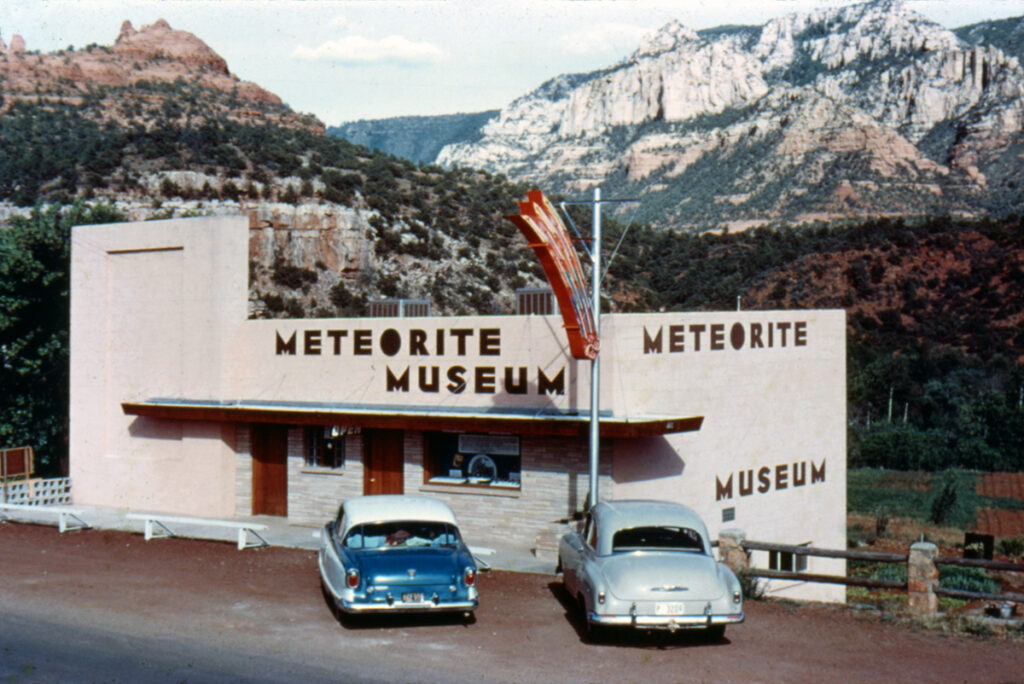
In September 1953, Harvey and Addie Nininger moved the American Meteorite Museum from Route 66 near Meteor Crater to a new building in Sedona, Arizona.
After seven years in the isolated stone building on Route 66, the move offered a welcome change. The new museum was bright and comfortable, with modern electricity, improved living quarters, and space for a garden. For the first time in years, the Niningers were again part of a community, with neighbors, shops, and everyday conveniences.
The museum continued its mission of introducing visitors to meteorites while supporting Nininger’s scientific research until its closure in 1960.
A Family Enterprise
The new museum initially attracted enough visitors to encourage the Niningers that their move to Sedona had been a wise decision. Although attendance was lighter than at the Route 66 location, the pace was more manageable.
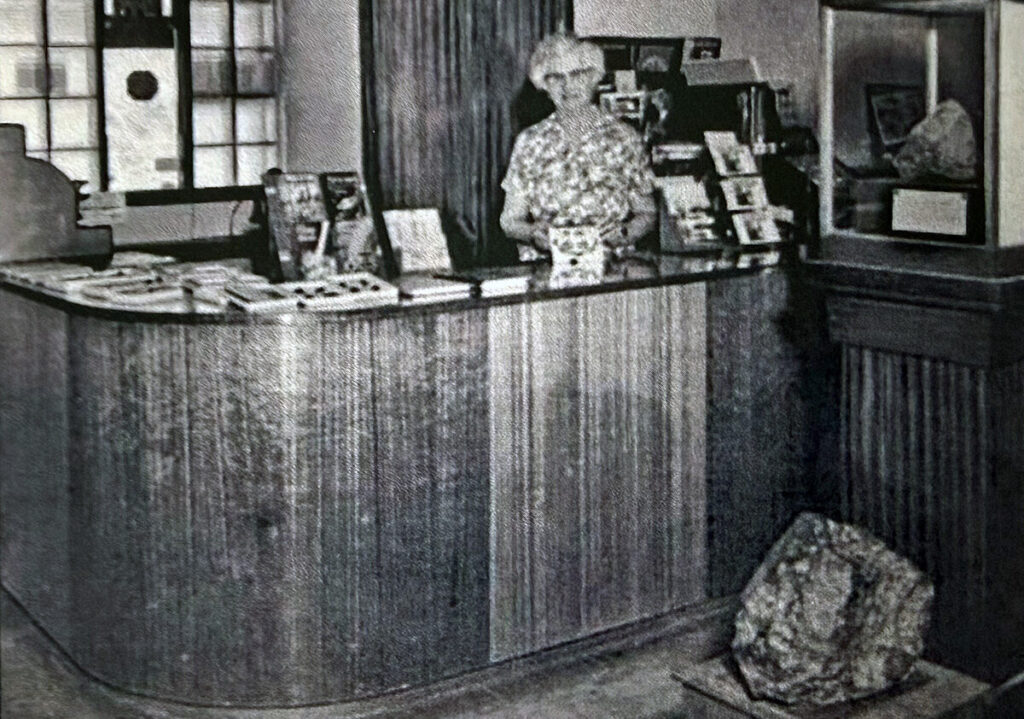
In 1955, their daughter Margaret and her husband, Glenn Huss, joined them to help operate the museum. Glenn developed a deep knowledge of meteorites and became an important part of the family’s work. The couple also assisted with Nininger’s publications, including Arizona’s Meteorite Crater and a revision of A Comet Strikes the Earth.
The Museum’s Educational Mission
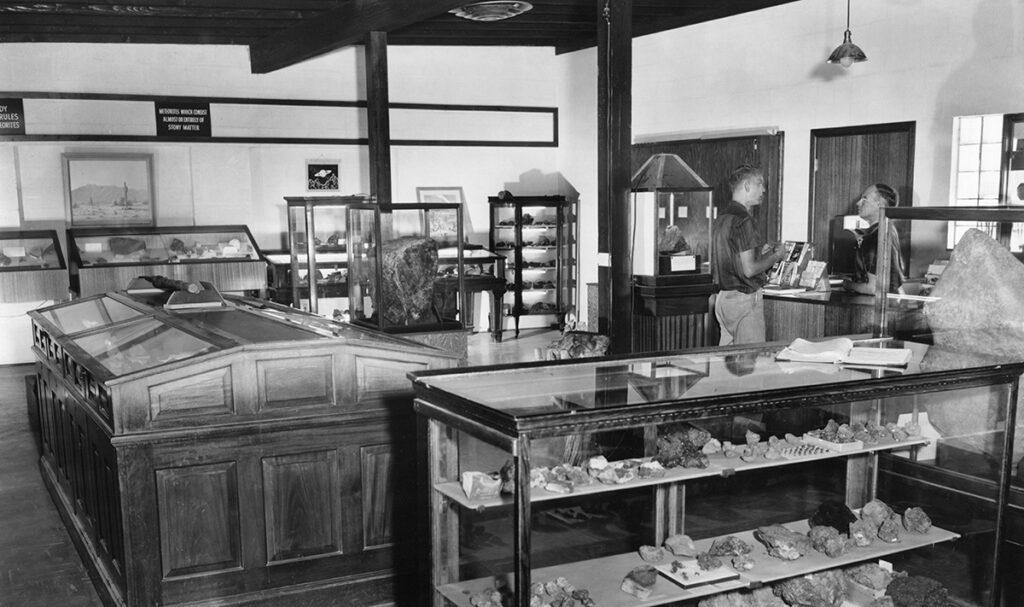
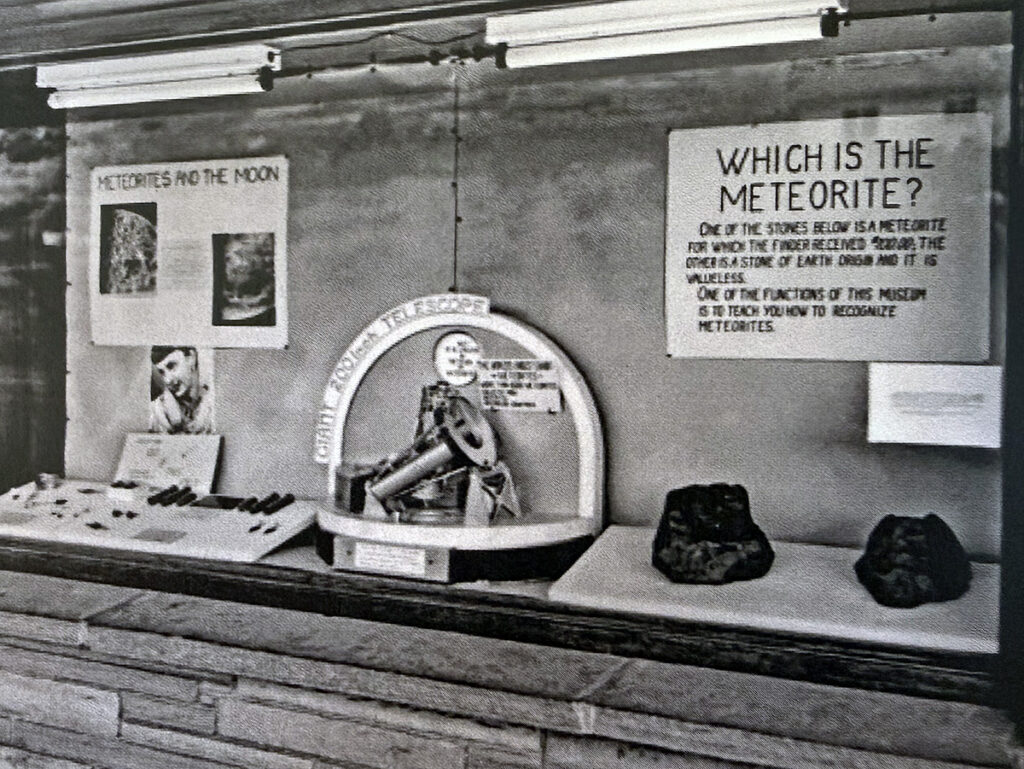
The Sedona museum offered visitors an unusual opportunity to see and handle actual meteorites while learning how to recognize them. Unlike larger natural history museums, it was devoted entirely to meteorites, allowing visitors to explore the subject in considerable depth.
Exhibits included meteorites in their natural condition, showing fusion crust, surface markings, and other distinctive features. Cut, polished, and etched specimens revealed their internal structures. Harvey Nininger continued to share his knowledge with visitors, answering questions and drawing on decades of fieldwork and research.
By Nininger’s estimate, the American Meteorite Museum had welcomed approximately half a million visitors since opening on Route 66 in 1946.
The Challenge of Keeping the Museum Open
Despite the museum’s educational value, financial difficulties continued. Sedona was growing, but the Niningers discovered that the increase in population and visitors did not translate into a corresponding increase in museum attendance. Winter business was particularly slow, and summer receipts were insufficient to carry the museum through the quieter months.
By 1957, Harvey and Addie faced a difficult decision. They had devoted decades to assembling their collection and sharing their knowledge, but it had become increasingly difficult to sustain the museum.
In 1958, the British Museum of Natural History acquired a substantial portion of the Nininger collection. The sale provided temporary financial relief, but it did not solve the museum’s long-term problems.
Harvey remained convinced that the collection had extraordinary scientific and educational value. He hoped it could eventually be preserved at an institution where it would remain available for research and teaching.
The End of an Era
In 1960, Arizona State University acquired the remaining Nininger meteorite collection, ensuring that these important specimens would continue to be available for scientific research and education.
With the sale, the American Meteorite Museum closed its doors after nearly fourteen years of operation at its two Arizona locations. From the isolated stone building on Route 66 to the more comfortable museum in Sedona, Harvey and Addie Nininger had introduced countless visitors to the fascinating world of meteorites.
Although the museum was gone, its legacy continued through the specimens preserved in major scientific collections and the generations of researchers and enthusiasts inspired by the Niningers’ work.
Explore more: Read about the American Meteorite Museum on Route 66.
Discover the full story in In Search of Falling Stars.