
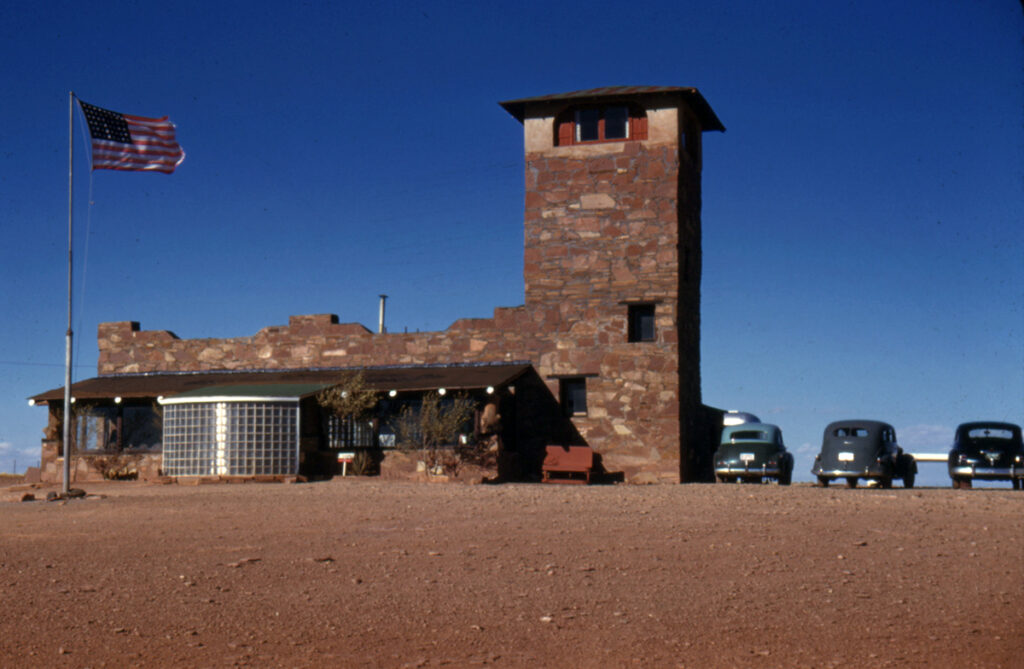
In 1946, H. H. Nininger and his wife Addie embarked on one of their most ambitious ventures: establishing the American Meteorite Museum on Route 66, a museum devoted entirely to meteorites. They leased an unusual stone building west of Winslow, Arizona, about five and a half miles north of Meteor Crater.
Nininger was determined that the museum would be different from the roadside attractions familiar to travelers along Route 66:
It was not the garish signs and gaudy tourist traps of Route 66 that attracted us. Our interest lay in the proximity of Meteor Crater and its emphatic testimonial to the effects on this earth of stones from space. Our institution would be a Meteorite Museum. Nothing else. No snakes, no skeletons, no stuffed birds, no wild animals, and no curios—just meteorites.
The building, previously known as the Observatory, stood on a small bluff overlooking the desert. Its heavy stone walls and prominent square tower made it a familiar landmark to travelers. From its windows, visitors could see the San Francisco Peaks to the west and the rim of Meteor Crater to the south.
For Nininger, the location offered an opportunity to share his remarkable meteorite collection with the public while continuing his scientific investigations of Meteor Crater.
Moving a Lifetime’s Collection
The undertaking was a considerable gamble. Over twenty-three years, Nininger had assembled a collection weighing approximately 16,000 pounds. Transporting the collection from Denver to Arizona was a formidable undertaking, involving nearly 200 boxes and crates, as well as numerous large iron meteorites.
The shipment arrived on October 9, 1946, several days late and in considerable disarray. After hours of unloading, the exhausted Niningers and their helpers settled outside to witness an extraordinary meteor shower. At its peak, they counted more than one hundred meteors in a single minute.
Nininger considered the celestial display a fitting prelude to the opening of the museum.
Ten days later, on October 19, the American Meteorite Museum opened its doors.
A Museum Unlike Any Other
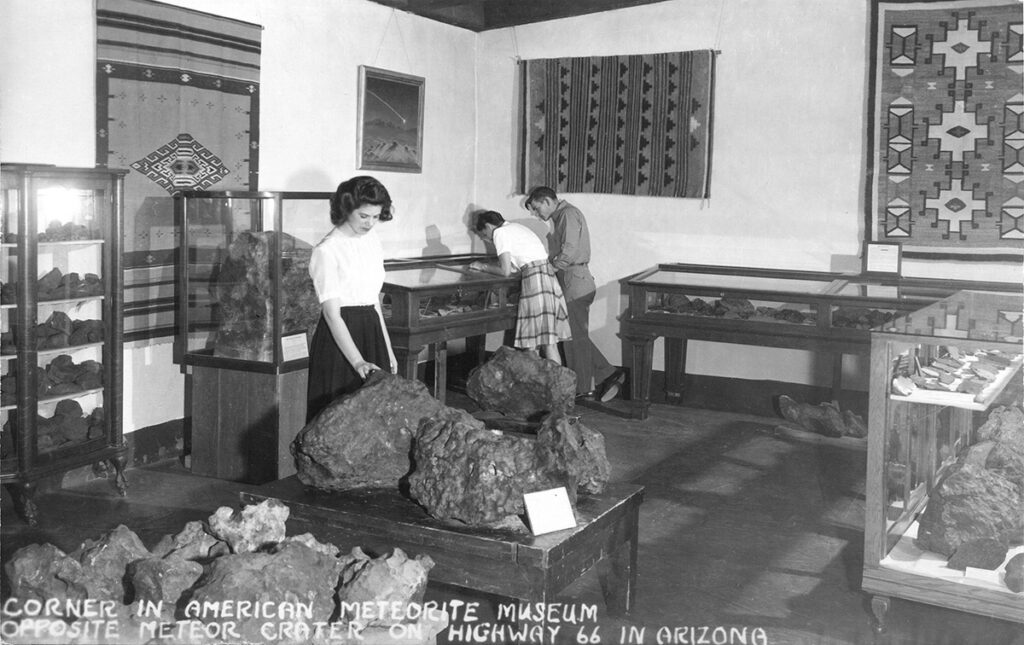
The museum offered visitors an opportunity to examine one of the world’s finest collections of meteorites. Exhibits illustrated seventeen aspects of meteorites and related phenomena, from their classification and structure to their origins and the formation of impact craters.
Visitors could handle actual pieces of matter from space. Nininger and his staff gave short talks throughout the day, with longer lectures for interested groups. Schoolchildren were sometimes given treasure hunts that led them through the exhibits.
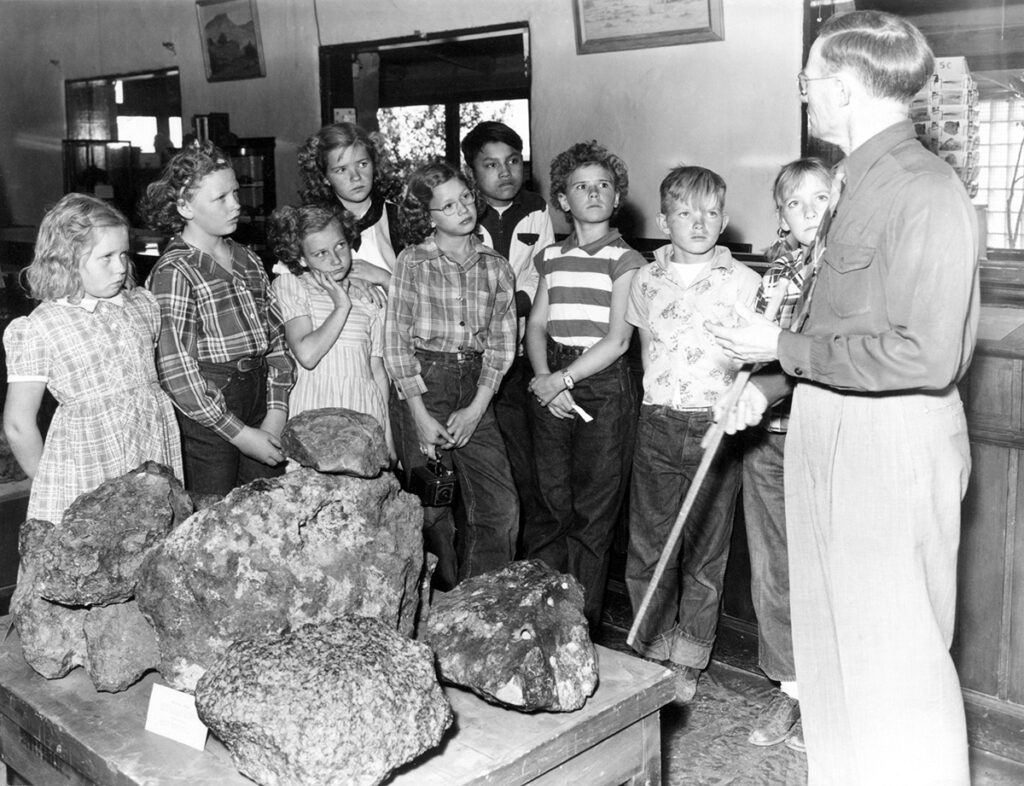
Admission was twenty-five cents for adults and fifteen cents for children.
The response was encouraging. Sixty visitors paid admission on opening day. During the museum’s first twelve months, more than 33,000 people visited, representing every state and forty-three foreign countries. More than 5,000 books and pamphlets were distributed.
The museum also attracted scientists who came to study Nininger’s collection, and it provided a convenient base for his continuing research at Meteor Crater.
Life on Route 66
Operating the museum was far from easy. Harvey and Addie lived in cramped quarters behind the exhibits, initially without electricity. They relied on gas and kerosene lanterns for light and brought ice from Winslow for their refrigerator.
Nininger recalled the challenges of life in their isolated desert location:
We measured our days by changes in the weather and in the flow of traffic, and by the ritual totaling of the cash register tape each evening. Winds blew so fiercely that our signs were toppled more than once, the garage roof had to be battened down and the trailer tied to keep it from blowing over, and at times, we had to shove heavy meteorites against the doors to hold them shut.
The museum was open seven days a week, with hours largely determined by daylight and the arrival of visitors. In 1947, Don and Ruth Thompson joined the Niningers to help with the exhibits, lectures, and demanding daily operations.
Despite the difficulties, the museum became an important center for public education about meteorites, supported by admissions, lectures, publications, and the sale of specimens.
End of the Road on Route 66
The museum’s fortunes changed dramatically in 1949, when a new alignment of Route 66 bypassed the building by approximately half a mile.
Nininger recalled looking through a window and seeing traffic streaming along the new highway. Almost immediately, the steady flow of visitors diminished. Museum income fell by roughly half.
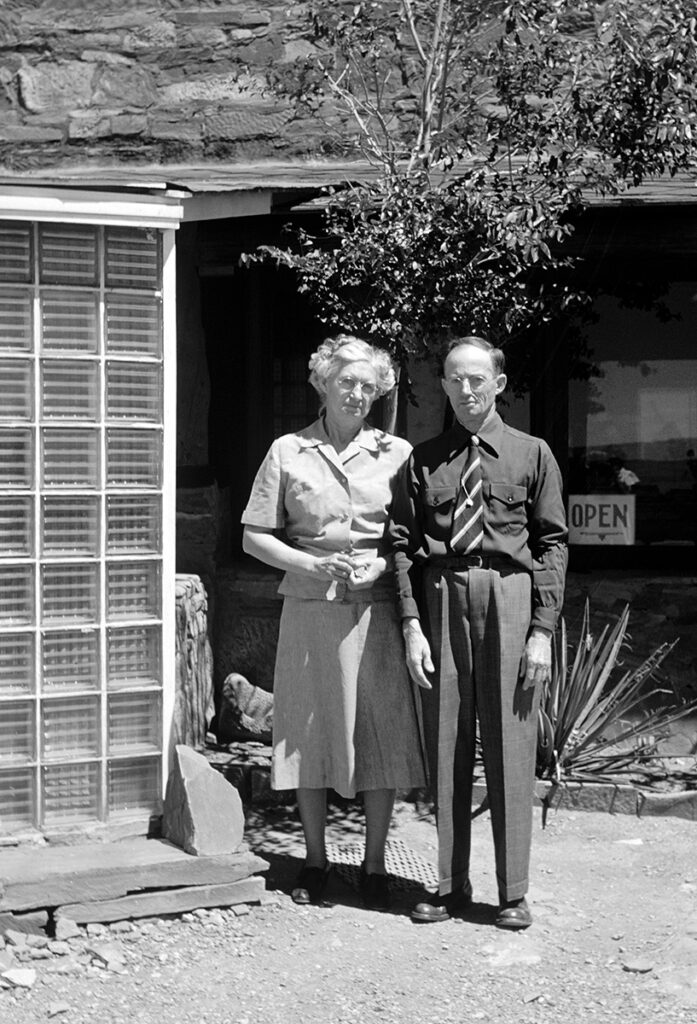
The financial consequences were severe. Don and Ruth returned to Denver, leaving Harvey and Addie to operate the museum largely on their own. They considered closing, but the terms of their lease prevented them from leaving until 1953.
The reduced traffic nevertheless gave Nininger more time for scientific investigations at Meteor Crater, work that led to some of his most important discoveries.
In September 1953, after seven years on Route 66, the Niningers moved their museum and meteorite collection to a new building in Sedona, Arizona.
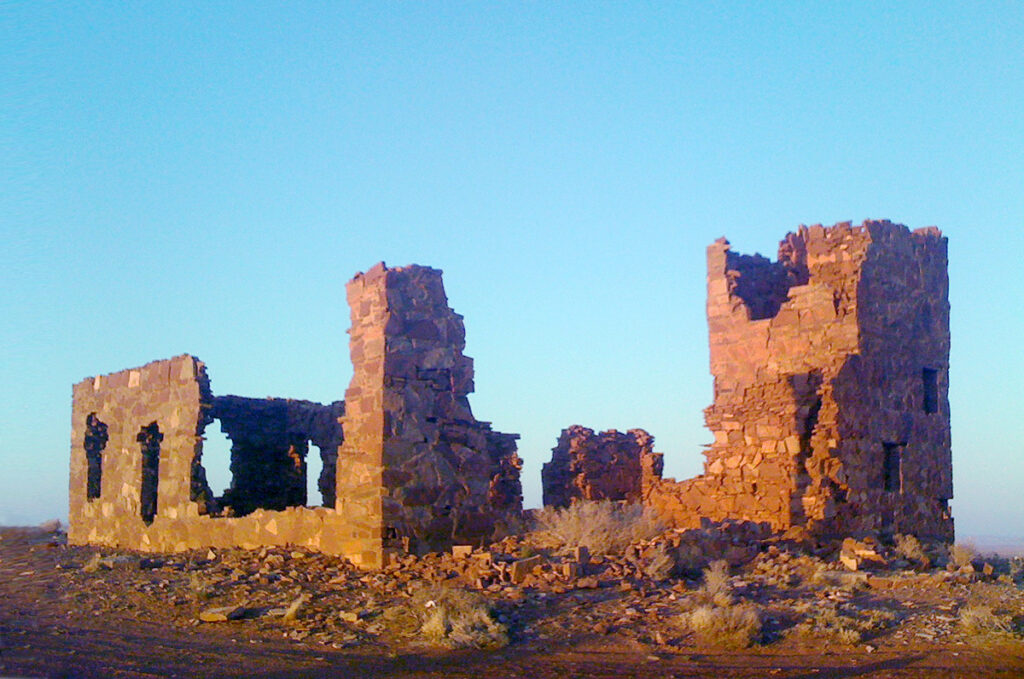
The Route 66 museum had been far more than a roadside attraction. It was an ambitious experiment in bringing the science of meteorites directly to the public, supported almost entirely by the efforts of Harvey and Addie Nininger. Despite its financial struggles, the museum welcomed thousands of visitors, attracted scientists from around the world, and provided a base for Nininger’s continuing research at Meteor Crater.
Its story would continue in Sedona.
Continue the story: The American Meteorite Museum in Sedona, Arizona (1953–1960).
The story of the American Meteorite Museum, including the challenges and discoveries of its Route 66 years, is told in greater detail in In Search of Falling Stars.