

Arizona State University’s meteorite collection has its roots in the pioneering work of H. H. Nininger. In 1960, as ASU was expanding its scientific research programs, the university acquired a major portion of Nininger’s collection. The acquisition helped establish ASU as an important center for meteorite research. The university subsequently recruited Carleton Moore to create and lead its Center for Meteorite Studies.
More than six decades later, that early investment continues to support research into meteorites, asteroids, and the origins of the solar system.
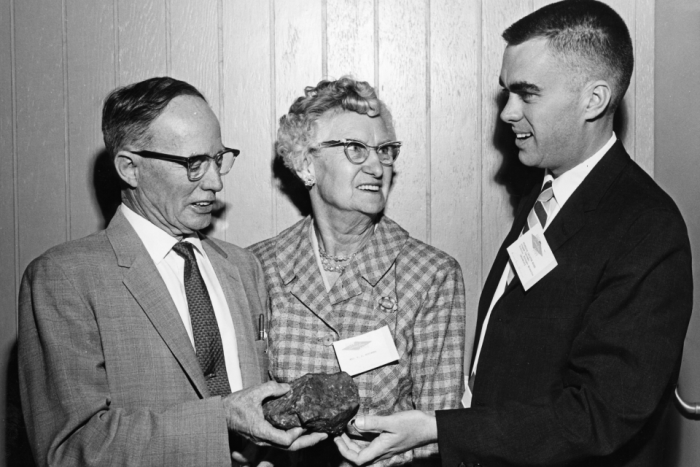
Nininger’s work anticipated the space age, and it proposed to grapple with a question humanity has always asked: What else is out there? . . . Today, there’s a direct link between the myriad space exploration missions on which ASU collaborates with NASA — such as the Psyche Mission, led by Lindy Elkins-Tanton — and that initial decision by ASU to invest in a collection of meteorites 65 years ago.
The story stretches from Nininger’s early meteorite collecting through the analysis of Apollo lunar samples and into ASU’s involvement in modern space missions. In January 2025, ASU News traced that remarkable history in The Meteorite Effect, by Bret Hovell.